
Short Course on Solar Radiation Applied for Water Treatment

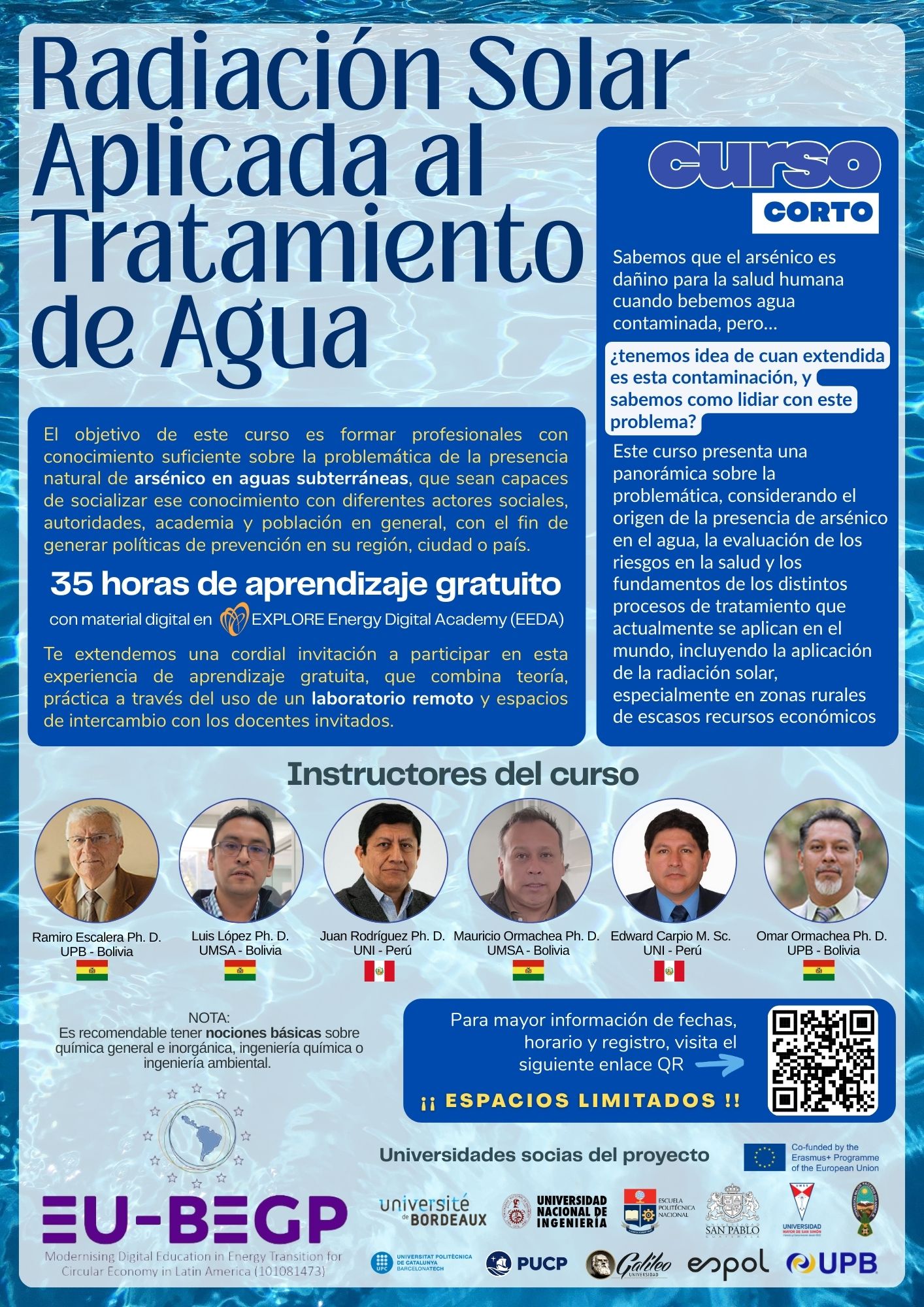
The short course “Solar Radiation Applied to Water Treatment” is delivered through the EXPLORE Energy Digital Academy (EEDA), bringing together participants from across Latin America for 35 hours of free, accessible, and high-impact training for communities and industry professionals. This educational space has become a hub for students, technicians, and specialists interested in innovative and sustainable solutions for water treatment.

Held from November 27 to December 16, 2025, the course introduces participants to the environmental and public health challenges posed by the natural presence of arsenic in groundwater. This issue affects thousands of rural communities in the region and requires a multidisciplinary approach for mitigation. Throughout the sessions, real-world cases, current regulations, and the importance of monitoring water quality in vulnerable areas are analyzed.

The program is led by seven renowned specialists from partner universities in Bolivia and Peru, who provide a solid regional perspective on key topics such as risk assessment, portability standards, emerging technologies, and local experiences in safe water management. Their participation ensures a comprehensive and contextualized vision for attendees.

The curriculum combines theoretical foundations with practical sessions conducted via a remote laboratory, allowing students to experience in real-time how solar radiation principles are applied to water purification. This interactive methodology fosters active learning and demonstrates how technology can expand access to advanced educational tools, even from remote areas.

Developed within the framework of the EU-BEGP Project and in close collaboration with the EEDA, this course strengthens regional capabilities in water treatment and management. Furthermore, it empowers participants to understand the impact of arsenic contamination, recognize its implications for public health, and contribute with prevention strategies and informed solutions within their own communities and organizations.

Partners: UMSA-BO / UNI-PE / UPB-BO

Start Date: 27 November 2025

Estimated Learning Hours (ELH): 35


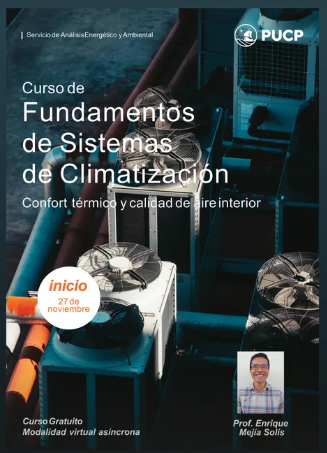
PUCP Presents a New Course on Fundamentals of HVAC Systems 

On November 27, 2025, the Pontificia Universidad Católica del Perú (PUCP) launches the course “Fundamentals of HVAC Systems,” an academic initiative specially designed for Mechanical Engineering students and related disciplines interested in understanding the essential principles of thermal comfort and energy efficiency in buildings.

Taught by Professor Enrique Mejía, the course provides participants with a solid foundation in HVAC (Heating, Ventilation, and Air Conditioning) fundamentals, energy performance, and modern construction systems—key knowledge for those seeking professional development in this rapidly evolving sector.

The program delves into topics such as heat transfer, refrigeration cycles, equipment selection, applicable regulations, and sustainable design criteria, allowing students to familiarize themselves with current tools used in the industry. Furthermore, it fosters an understanding of how HVAC solutions can contribute to reducing energy consumption and improving well-being in residential, commercial, and industrial spaces.

Prior to the course launch, PUCP hosted an event organized by the ASHRAE PUCP Student Branch, featuring Alfredo Escárate Cobeñas, representative of the ASHRAE Peru section, who delivered a talk that generated significant interest. During the session, the increasingly relevant role of mechanical engineers in the HVAC industry was discussed, particularly regarding the growing demand for efficient, safe, and sustainable solutions. The meeting also allowed students to learn firsthand about current trends in building science and the challenges associated with designing thermally comfortable environments in various types of buildings.

The upcoming course was also presented during the event, sparking great enthusiasm among the student community as it represents an opportunity to acquire highly valued skills in the job market. This initiative is part of PUCP’s contribution to the EU-BEGP Project, developed in collaboration with the EXPLORE Energy Digital Academy (EEDA), reaffirming both institutions’ commitment to training professionals capable of facing the region’s energy and environmental challenges.

Partner: PUCP-PE

Start Date: 27 November 2025

Estimated Learning Hours (ELH): 35


Gender Balance in EU-BEGP

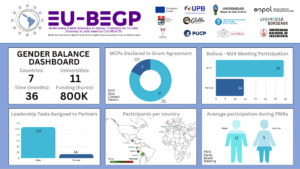
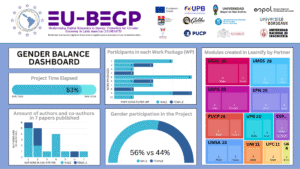
Promoting gender balance is a central component of the EU-BEGP project, as inclusivity and equal opportunities are essential for advancing higher education and the energy transition. Throughout the project’s implementation, the consortium has consistently monitored and measured the participation of women and men across activities, academic outputs, leadership roles, and capacity-building initiatives.

The gender balance dashboard provides a comprehensive visualization of these indicators, allowing partners to identify disparities, track progress, and take informed actions toward greater equity. This ongoing monitoring not only enhances transparency within the project but also serves as a valuable tool for partners to implement improvements in their institutions and contribute to a more inclusive academic and professional environment.


Biomass Innovation in Focus: Expert Course begins in Bolivia

Bolivia – July 2025

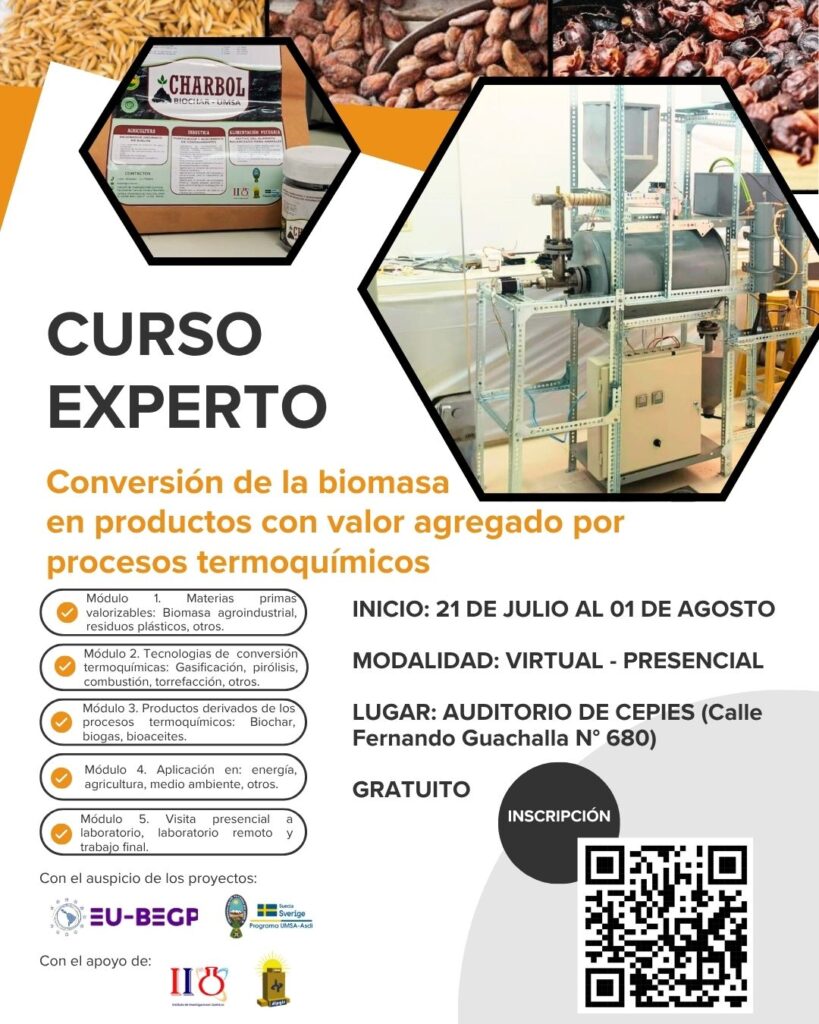
A major milestone in capacity building is underway as Universidad Mayor de San Andrés (UMSA) leads the first EU-BEGP Expert Course: “Conversion of Biomass into Value-Added Products through Thermochemical Processes.”
The course counts on the valuable collaboration of Universidad Mayor de San Simón (UMSS) and Universidad Privada Boliviana (UPB) — both key partners from Bolivia.
With over 100 participants from multiple countries and delivered in a hybrid format (in-person and online), the course has sparked a vibrant, crossborder exchange of ideas and collaboration. This enriching environment reflects EU-BEGP’s commitment to inclusive, international capacity building.

As part of the final evaluation, groups are working on applied projects in areas such as:
🍬 Sugarcane waste
☕ Coffee residues
🧱 Construction and housing materials
♻️ Plastics
🌿 Other biomass sources

“This project is a clear example of how collaboration between academic institutions and European funding can drive scientific and technological development in our region,” stated Evelyn Cardozo PhD, head of the CUIE. “By making this control module available to the scientific community, we are contributing to the training of highly skilled professionals and the search for sustainable solutions to the energy challenges of the future.”

This course reflects EU-BEGP’s mission to stimulate innovation, strengthen academic excellence, and promote sustainability across Latin America. It also demonstrates how digital platforms and inter-institutional collaboration can create inclusive, dynamic spaces where knowledge becomes a shared tool for sustainable transformation.
The initiative stands as an inspiring example of how science, technology, and education can work hand in hand to address regional challenges while preparing the next generation of empowered, forward-thinking environmental innovators.


Innovative energy control module arrives at UMSS, driving global learning

Cochabamba, Bolivia – September 2024

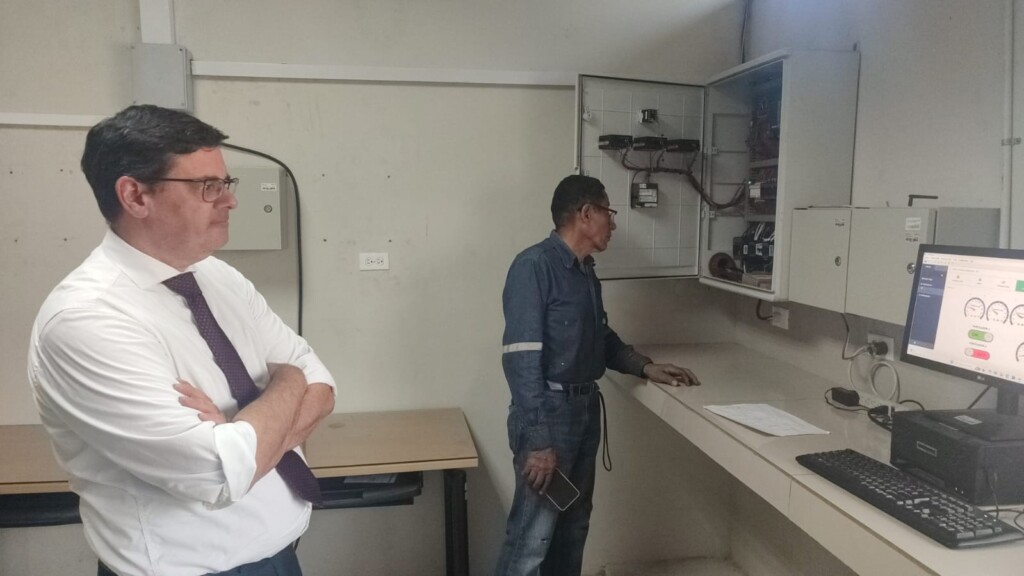
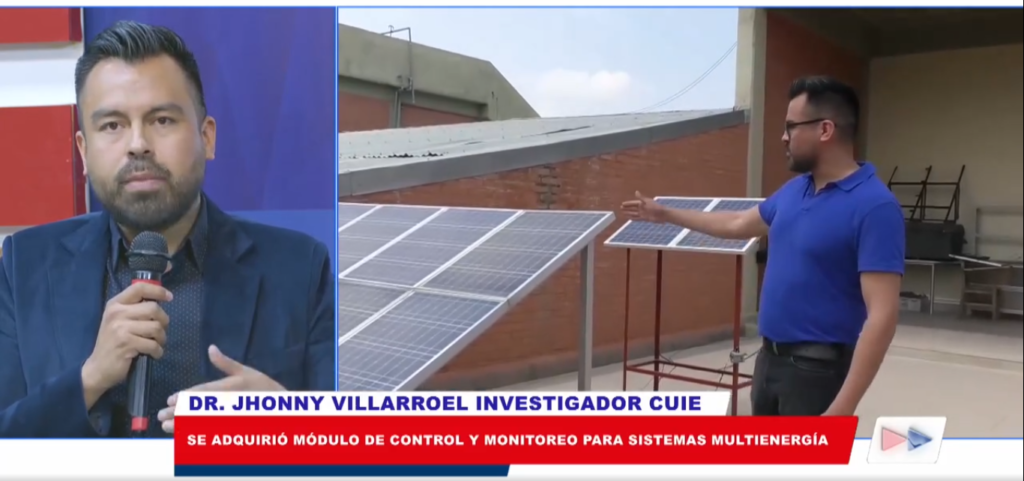
San Simón University (UMSS) has made a significant stride towards the forefront of renewable energy research with the recent installation of an innovative control and monitoring module for multi-energy systems. This accomplishment, funded by the Erasmus+ program through the EU BEGP project, marks a crucial milestone for the educational institution and helps CUIE (University Energy Research Centre) to position as a reference in developing clean technologies.

The module, which will grant researchers and graduate students from around the world access to and experimentation on a real solar system, will facilitate experimentation and the development of new solutions in the field of renewable energies. This state-of-the-art tool will benefit the UMSS scientific community and open doors to international collaborations nd knowledge exchange.
“This project is a clear example of how collaboration between academic institutions and European funding can drive scientific and technological development in our region,” stated Evelyn Cardozo PhD, head of the CUIE. “By making this control module available to the scientific community, we are contributing to the training of highly skilled professionals and the search for sustainable solutions to the energy challenges of the future.”

Collaboration with UMSS to Achieve European Standards
It is important to highlight that this project is part of a broader initiative at UMSS to standardize higher education and achieve quality levels comparable to those of the best European universities.
By incorporating state-of-the-art technological components and promoting research in strategic areas such as renewable energies, UMSS is consolidating its position as a leader in the training of highly qualified professionals and the generation of impactful scientific knowledge.
“The installation of this control module is another step in our commitment to offering our students an excellent education and contributing to the sustainable development of our country,” added Johnny Villarroel PhD. “We are convinced that this initiative will have a positive impact on Bolivian society and the world at large.”


USPG’s progress on wind tunnel and remote lab development

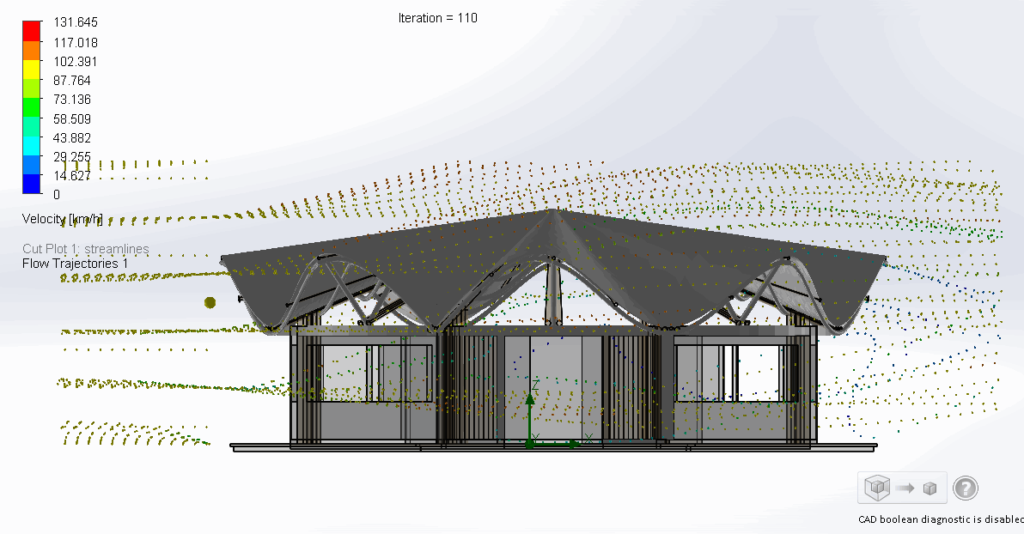
Universidad San Pablo de Guatemala (USPG) is making notable steps with its remote laboratory, focusing on wind tunnel experiments and simulation technologies. While the full implementation of their remote lab is underway, the team has already begun utilizing 3D printers and simulation software to model wind currents and environmental interactions. In their current projects, USPG is designing elements such as buildings to simulate realworld conditions. By combining mathematical calculations with wind tunnel testing, they aim to validate and refine their models.

This approach will allow them to compare theoretical predictions with practical results, enhancing their research outcomes once the remote lab is fully operational. As the development of remote labs progresses, it is evident that most of the partners are deeply committed to this initiative. The implementation of these labs not only advances research but also facilitates meaningful interactions between students from different universities. This collaboration enriches the educational experience and aligns perfectly with the project’s objectives, creating a more interconnected and innovative academic environment


Solar Energy Management at UMSS

Our partners have been actively engaged in various innovative activities that contribute to the overarching goals of the project. One noteworthy contribution comes from Prof. Evelyn Cardozo of UMSS, who has provided
an update on the recent advancements in their Solar Energy Management Remote Lab.

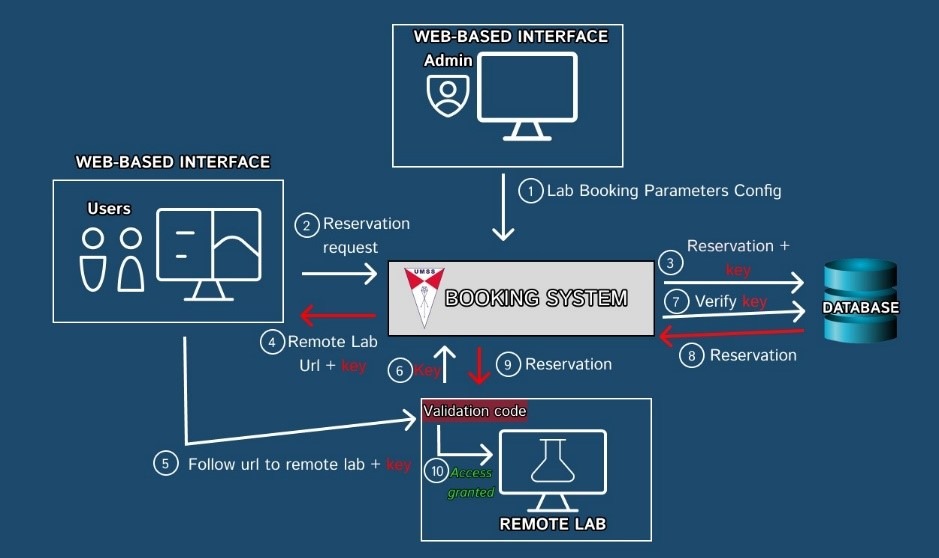
In April 2024, UMSS successfully tested the web-based control system of the Solar Energy Management Remote Lab. This pioneering initiative allows students from around the globe to access and interact with the lab’s features simply by navigating to a web URL.

The team from UMSS elaborated on the functionality of this system, highlighting its user-friendly design. Students can upload a file containing the hourly electricity demand data of a house. Once uploaded, they have the flexibility to set the start time for the experiments and monitor the progress in real-time through the web interface. This interactive approach not only enhances the learning experience but also provides practical insights into solar energy management.

Upon completing the experiments, students can download the results file for analysis, enhancing their understanding of the data. This remote lab setup integrates technology with education, making advanced learning
accessible globally. The successful implementation at UMSS showcases the potential of remote labs to expand educational reach and provide hands-on experience in energy management, highlighting the innovative spirit and collaboration of our project partners.

UMSS is showing a great progress to implement a new and improved platform for the students and will continue with the assembly of the remote lab.


Acknowledgment

The remote labs and materials belong to the EU-BEGP Project (101081473).